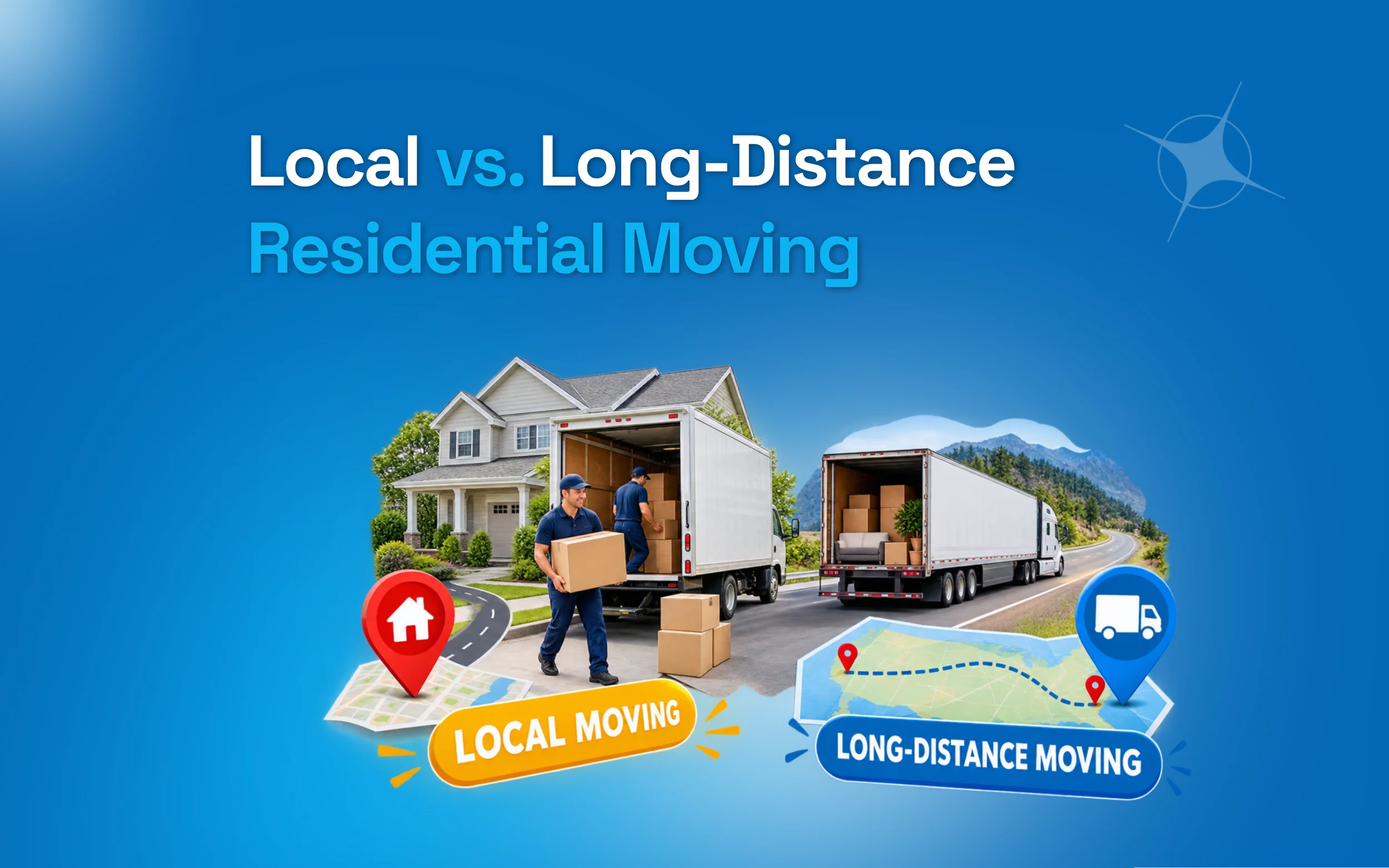
Is moving across town really that different from moving across the country? Yes. It is very different. Local vs. long-distance residential moving is not just a difference in miles. It changes your price, your timeline, your packing plan, and even the paperwork. A local move is usually short and billed by the hour. A long-distance move is usually billed by weight and distance. It can also take several days to arrive. Knowing this early saves you from nasty surprises.
Many families pick the wrong plan because they think a move is just a move. That mistake can cost money and cause stress. This guide compares both types in a clear and simple way. You will see the costs, timelines, packing needs, and risks side by side. You will also learn what to ask before you hire a mover. By the end, you will know which option fits your home, your budget, and your schedule. Let us break it down step by step so you can plan with real confidence.
What Is Local Residential Moving?
A local residential move is a home move within the same city or nearby area. Many movers treat a move under about 50 miles as local. This limit changes by company and by state, so always ask. The truck usually goes from your old home to your new home on the same day. The crew arrives in the morning. They load your things. They unload them at the new place before night. Most local moves take one day. Large homes may need two. The price is mostly based on time. You pay for the number of movers, the truck, and the hours worked. Travel time between the two homes may also count. Because the distance is short, the move feels simple. Still, it needs a good plan. Stairs, parking, and elevators can add hours. Even a short move can go wrong without a clear plan and a trusted crew.
What Is Long-Distance Residential Moving?
A long-distance residential move takes you far from your old home. It often means a move to another state. Many companies treat any move over 100 miles as long-distance. Some use 400 miles as the line. The exact rule differs by mover, so confirm it before you book. These moves need more time and more planning. Your things may travel for several days. The truck may also carry items from other homes. Your price depends on the weight of your goods and the miles driven. Movers often review your inventory before they give a quote. Delivery usually comes in a window of days and not at one exact hour. That is normal. You also face more paperwork. A written estimate and a bill of lading are common. You may need a plan for pets, cars, and kids on the road too. If you are planning a big move, see these long distance moving services for an idea of what to expect.
Local vs. Long-Distance Residential Moving: Side by Side
A quick view helps you see the gap. This table shows how the two types differ in the areas that matter most. Use it as a simple guide before you ask for quotes. Details can change by company.
|
Factor |
Local Move | Long-Distance Move |
| Distance | Usually under 50 miles |
Often 100 miles or more |
|
Move time |
Often one day | Several days or more |
| Pricing | Mostly hourly |
Mostly by weight and miles |
|
Delivery |
Same day | Within a delivery window |
| Packing level | Lighter packing may work |
Strong packing needed |
|
Paperwork |
Light | More forms and records |
| Planning time | A few weeks |
Two to three months |
|
Risk of delay |
Low |
Higher |

How Pricing Works for Each Move
Price is the biggest worry for most families. The way movers bill is the main difference between the two types. Knowing this helps you compare quotes fairly and avoid surprise charges later. Treat any rate you hear as a guide only.
Hourly billing for local moves: Most local movers charge by the hour. The rate depends on crew size and truck size. A travel fee may be added. Ask if the clock starts at your door. Our guide on how much local movers cost shows common charges.
Weight and miles for long moves: Long-distance movers usually price by the weight of your goods and the miles driven. More furniture means more weight. More weight means a higher bill. Cut extra items before the move to save money.
Extra services: Packing, unpacking, and storage cost extra in both types. Stairs, long carries, and heavy items such as pianos may also add fees. Ask for every fee in writing before you agree.
Fuel and tolls: On long trips fuel and tolls matter more. Some quotes include them. Others add them later. Always ask if the quote is all in so the final bill does not shock you.
Binding or non-binding quotes: A binding quote fixes the price for the listed goods. A non-binding quote can change after your items are weighed. Know which one you get before you sign anything.
Hidden charges: Some bills grow after the move starts. Read about hidden moving costs so you know which charges to watch for before you book a date.
Time and Schedule Differences
Time works very differently in each type. A local move often starts and ends in one day. You can book a morning slot and sleep in your new bed that night. A long-distance move runs on a longer clock. Pickup may happen on one day. Delivery may come several days later. The driver must follow road rules and rest hours. Weather and traffic can also slow the trip. This is why you should keep a bag of daily needs with you. Pack clothes, medicine, chargers, and papers. Do not put them on the truck. Planning time also changes. For a local move a few weeks may be enough. For a long-distance move you should start two or three months early. Early booking gives you better dates and often better rates. It also gives you time to sort, sell, or donate things you do not need.
Packing Differences in Local vs. Long-Distance Residential Moving
Packing is not the same for both moves. A long trip shakes your boxes more. A short trip is gentler but still needs care. Here are the main points to remember for each type.
Box strength: Long trips need strong boxes with tight tape. Weak boxes can collapse under weight in a big truck. For a short local trip lighter boxes may work but fragile items still need good cushions.
Fragile items: Wrap dishes, glass, and frames with paper or bubble wrap. Fill empty gaps in the box so nothing moves. This matters most on long trips where the truck rides for many hours.
Labels: Write the room name and a short list on every box. Mark fragile boxes clearly. Good labels save hours when you unpack and help movers place boxes in the right room.
Furniture wrap: Movers should use pads and wrap on all large pieces. Long trips need extra care so wood and fabric do not scratch or tear. Ask your crew how they protect furniture.
Electronics: Take photos of cable setups before you unplug them. Pack screens in their original boxes if you still have them. This makes setup fast in your new home.
Packing help: If you are short on time, a crew can pack for you. Learn what is included in full packing assistance before you decide.
Risk to Your Belongings
Your things face different risks in each move. In a local move your items spend only a few hours in the truck. Handling happens once at each end. In a long-distance move your items ride for many miles. They may be loaded and unloaded more than once. Road bumps, heat, and cold can also play a part. This is why good packing and good loading matter so much. Ask how the crew secures furniture. Ask if they use pads, straps, and wardrobe boxes. Take photos of valuable items before the move. Keep a list of everything you own. If something is damaged you will have proof. Also ask about protection. Basic coverage is often based on weight and not on the real value of an item. You may want extra cover for costly things. Always read the terms before you sign.
Rules, Licenses, and Paperwork
Paperwork is lighter for local moves and heavier for long ones. Rules also depend on where you live. This is general information only. Please verify the rules for your state before you hire.
State rules for local moves: Many local moves fall under state rules. Each state has its own license and pricing rules for movers. Check your state website to see what your mover must have.
Federal rules for state to state moves: In the US a mover that crosses state lines should have a USDOT number. You can look up that number on the FMCSA website. Do this before you pay any deposit.
Written estimate: Always ask for a written estimate. It should list the services, the date, and the price. A phone promise is not enough if a problem comes up later.
Bill of lading: This is the main contract for a long-distance move. It lists your goods and the terms. Read every line before you sign it and keep your copy safe.
Inventory list: The crew should list each item and note its condition. Check it with them on pickup day. A clear list protects you if you need to file a claim.
Insurance and Protection at a Glance
Protection works a little differently in each move. This table gives a simple view. Always ask your mover for the exact terms in writing since plans differ.
|
Topic |
Local Move | Long-Distance Move |
| Basic coverage | Often limited and set by the mover |
Often based on weight |
|
Extra cover |
Can be added for costly items | Often worth adding |
| Proof needed | Photos and item list |
Photos and signed inventory |
|
Claim time |
Check the mover’s policy | Check the bill of lading |
| Best tip | Ask what is covered |
Ask what is not covered |
Planning Timeline: When to Start
Good timing removes a lot of stress. Local moves need less lead time. Long-distance moves need much more. Use this table as a rough guide and adjust it for your own date.
|
Time Before Move |
Local Move | Long-Distance Move |
| 8 to 12 weeks | Sort items and set a budget |
Book a mover and get written quotes |
|
4 to 6 weeks |
Book your mover | Pack rooms you rarely use |
| 2 weeks | Pack most rooms |
Confirm dates and pickup window |
|
1 week |
Confirm the crew | Pack your essentials bag |
| Moving day | Walk through each room |
Check the inventory with the driver |
Want a full to-do list? Use this residential moving checklist to track every step.
Pros and Cons of a Local Move
A local move has clear strengths. It also has a few weak spots. Here is a fair look at both sides so you can decide with a clear head.
Pro, lower cost: Short trips often cost less because there is no long drive. You pay mostly for time. If you stay organized the final bill can stay low.
Pro, fast finish: Most local moves end in one day. You see your things arrive at once. You can start to settle in right away without waiting for a delivery.
Pro, easy control: You can drive over yourself and check on things. You may also move small items in your own car. That gives you more control over fragile pieces.
Con, hourly risk: Delays raise the bill. A late elevator or poor parking can add real cost. Plan access and parking early so the crew does not lose time.
Con, tight windows: Your old home and new home must be ready on the same day. Lease dates and key handovers must match. A small gap can cause a big headache.
Pros and Cons of a Long-Distance Move
A long-distance move is a bigger job. It brings more risk but also more support from a professional team. Look at both sides before you pick a plan.
Pro, less driving: You do not need to drive a big truck for hundreds of miles. A trained crew handles the road. You can travel in your own car and save your energy.
Pro, flexible service: Many movers offer packing, storage, and delivery windows. This helps when your new home is not ready yet. You can plan around real life.
Pro, a fresh start: A move far away can bring a new job, a new school, or a new city. The right plan makes that change feel smooth and exciting.
Con, higher cost: Distance and weight raise the price. Fuel, time, and labor all add up. You can lower the cost by moving fewer items and booking early.
Con, wait time: Your things may arrive days after you do. Keep an essentials bag with clothes, medicine, and chargers. Do not leave important papers on the truck.
Should You Move Yourself or Hire Movers?
Some people try a local move alone. It can work for a small apartment. You rent a truck and ask friends to help. But heavy furniture, stairs, and long hours add up. One hurt back or one broken item can cost more than a crew would have. Doing a long-distance move alone is even harder. You must drive a large truck for many miles. You need fuel, tools, and hotel stays. You also lose work days. Trained movers bring the right gear and know how to load a truck so items stay safe over distance. If you are not sure, read this simple guide: should I hire movers or move myself. Compare the full cost of your time and risk and not just the truck rental price.

Smart Ways to Save Money on Either Move
You do not need a huge budget to move well. A few smart habits can cut costs in both types. Pick the ones that fit your life and start early.
Declutter first: Sell or donate what you no longer use. Fewer items mean fewer boxes and less weight. For long-distance moves this can lower the bill a lot.
Move off peak: Summer weekends and month ends are busy. Try a weekday or a mid month date. You may get better rates and more choice of crews.
Compare three quotes: Ask at least three movers for written quotes. Compare them line by line. Do not judge by the final number alone since services may differ.
Pack some items yourself: Pack books, clothes, and linens on your own. Leave fragile items to the pros if you are unsure. This mix saves money and still protects key items.
Be flexible with dates: Ask if a small date shift lowers the price. Many movers have slow days. Flexible timing can bring real savings with no loss of quality.
Ask about every fee: Stairs, long carries, and heavy items can raise the price. Ask for a full list of possible charges so you can plan for them ahead of time.
Common Mistakes to Avoid
Most moving problems come from a few simple mistakes. The good news is that you can avoid them. Check this list before you book anything.
Picking the lowest quote only: A very low price can hide poor service or extra fees later. Look at reviews, license, and what the quote includes. Low price and good service rarely come together.
Skipping the license check: Always confirm that your mover is real and licensed. Ask for the license number and look it up. This one step protects your money and your things.
No written inventory: Without a list you cannot prove what was lost or broken. Walk through your home with the crew and agree on the list before the truck leaves.
Booking too late: Last minute bookings cost more and leave you with fewer choices. Start early, especially for a long-distance move in busy months.
Ignoring protection: Basic coverage may not match the value of your things. Ask what is covered and think about extra cover for costly items.
Forgetting the essentials bag: Keep medicine, chargers, papers, and a change of clothes with you. Long moves can take days and you will need these items right away.
How to Choose the Right Mover
The right mover makes both types of moves easier. Start by checking the license and insurance. Read real reviews from past customers. Ask for three written quotes and compare them line by line. Ask clear questions about fees, delivery dates, and damage claims. A good company answers without stress and puts everything in writing. For a deeper look, read our guide on how to choose a residential moving company. If you want a team that handles both short and long trips, look at these residential moving services. Match the mover to your move type. Local moves need a team that is quick and well-organized. Long-distance moves need a team with strong planning and clear updates on the road. Trust is the key.
Frequently Asked Questions
1. What is the main difference between local and long-distance residential moving?
The main difference is distance and how you pay. A local move is short and usually billed by the hour. A long-distance move covers many miles and is usually billed by weight and distance. Long moves also take more days, more planning, and more paperwork than local ones.
2. How many miles is a long-distance move?
There is no single rule for every mover. Many companies call a move over 100 miles long distance. Some use 400 miles. Moves across state lines may also follow different rules. Ask your mover how they define it, and verify with your state rules.
3. Which type of move costs less?
A local move usually costs less because the trip is short. A long-distance move costs more because of weight, fuel, and time. Still, the final price depends on your home size, services, and date. Always compare written quotes from a few movers.
4. How long does a long-distance move take?
It depends on the distance and the mover. Loading may take one or two days. The trip may take several days or more. Delivery often comes in a window of dates. Ask your mover for a clear plan and keep a bag of daily needs with you.
5. Can I do a local move myself?
Yes. A small local move can be done alone with a truck and some help. But heavy items, stairs, and tight time can make it hard. Think about your time, your safety, and the risk of damage before you decide.
6. When should I book my movers?
Book a local mover about four to six weeks ahead. Book a long-distance mover two to three months ahead if you can. Busy seasons fill up fast. Early booking gives you better dates and more choice.
7. What should I ask before hiring a mover?
Ask if they are licensed and insured. Ask for a written quote and a list of all fees. Ask how they protect your items and how claims work. Also ask for recent reviews. Clear answers are a good sign of a trusted company.
Conclusion
Local vs. long-distance residential moving comes down to a few simple things. Distance, price, time, and risk. A local move is quick and often cheaper. A long-distance move needs more planning but a good team can make it smooth. Know your move type first. Then plan your budget, your dates, and your packing around it.
Do not rush this choice. Compare quotes, check licenses, and ask every question you have. Keep your papers and your essentials bag close. Use the tables and tips in this guide as your checklist. A calm plan leads to a safe move and a happy start in your new home. Whether you move across town or across the country you can do it with confidence.
Ready to Plan Your Move?
Get clear help from a team that knows both local and long-distance moves. Check your price with the moving cost calculator or get a free quote today. Our team can match you with the right residential moving services for your home and your budget.