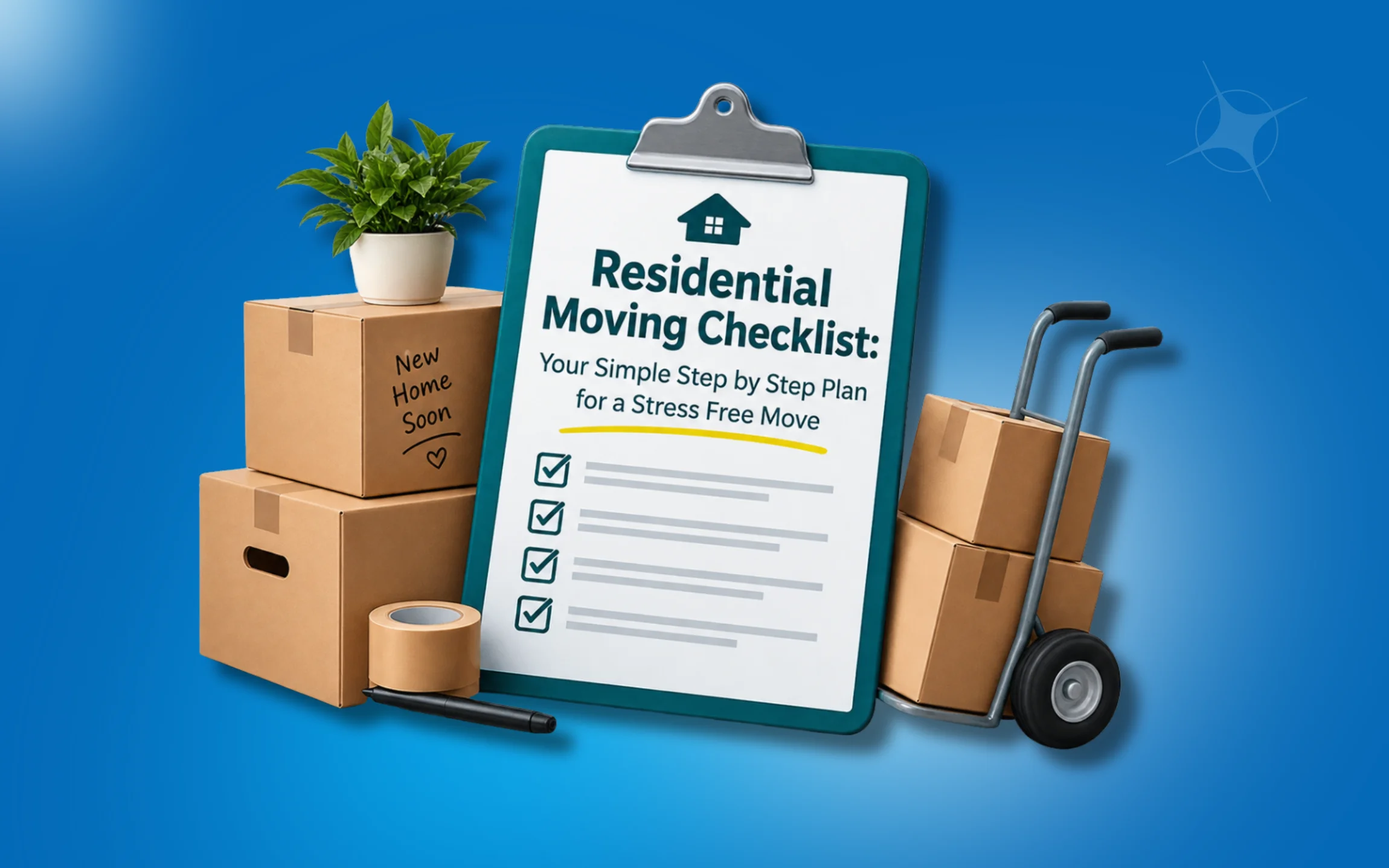
Moving day always comes faster than you expect. A residential moving checklist is a simple list of tasks that guides you from the first day of planning to the last box in your new home. It tells you what to do and when to do it. With one in hand you stop forgetting small things. You also save money and cut stress. Most people feel calmer once the plan is on paper. Even a short list can change how the whole move feels.
This guide gives you a clear plan for every stage of your move. You will learn what to do eight weeks out and how to pack room by room. You will also see budget tables and a full moving day plan. Every step uses easy words. You do not need special skills for this. Just a pen and a little time. Follow the list in order and your move will feel smooth. Let us get started.
What Is a Residential Moving Checklist?
A residential moving checklist is a task list for moving from one home to another. It breaks a big job into small steps. Each step has a clear time frame. You may see tasks like booking movers, packing, and changing your address. The list works for apartments and houses. It also works for short and long moves. Think of it as a map for your move. Without a map, people often get lost. They forget to cancel utilities or miss a lease date. A good list stops those problems early. You can write one on paper or keep it on your phone. Share it with your family so everyone knows their part. Tick off each task as you finish it. That small habit gives you a real sense of progress. It also shows you what is left on busy days. Keep the list close and check it every day.
Why a Moving Checklist Helps You
Here is what a good plan does for you:
Saves time: A list shows you what to do each week. You stop wasting hours on guesswork and repeat tasks. Every minute goes to something that matters.
Cuts stress: Moving feels big when everything sits in your head. Writing it down makes the job feel smaller. You can see the end of the list.
Protects your money: Rush fees and last-minute buys add up fast. A plan helps you book early and buy only what you need. Your budget stays under control.
Avoids lost items: When you pack with a plan you label every box. You also keep a record of what went where. Missing items become rare.
Keeps family on the same page: Everyone can see the tasks and the dates. Kids and partners know what to do. Nobody has to ask what comes next.
Helps with the small tasks: Mail, utilities, and school records are easy to forget. A list reminds you before it becomes a problem. You will not miss a single bill.
Eight Weeks Before Your Move
Eight weeks out is the best time to start. You have plenty of room to think and plan. Begin with these tasks.
Set your moving date: Pick a date that fits your lease or closing day. Check the calendar for work events and school dates. A fixed date makes every other task easier.
Create a moving binder: Keep all papers in one place. Add quotes, receipts, lease papers, and your checklist. A simple folder or a phone app also works well.
Set a budget: List every cost you can think of. Include movers, boxes, fuel, deposits, and cleaning fees. Add a little extra for surprises.
Research moving companies: Look for licensed and insured movers. Read reviews and ask friends for ideas. Get at least three quotes before you choose.
Check your new place: Measure doors, halls, and rooms. Make sure your large furniture will fit. This saves you from a nasty surprise on moving day.
Start a declutter list: Walk through each room and note what you do not need. Fewer items mean fewer boxes and a lower bill. Start small and build from there.
Six Weeks Before Your Move
Six weeks out is the time to lock in your big choices. You should book your movers now. Good dates fill up fast. This is especially true at the end of the month and in summer. Read each quote with care. Check what is included and what costs extra. Ask about stairs and long carry fees. Ask about the rules for fragile items. Confirm that the company has a valid license and insurance. If you want expert help the Residential Moving Services team can plan the whole job for you. You can also decide on a DIY move. Weigh the time and the effort before you pick that path. Our guide on DIY vs hiring movers can help you decide. Once you choose, get everything in writing. Keep a copy in your moving binder. Then you can move on to the next task with a calm mind.
Four Weeks Before Your Move
One month out is when real action begins. You should have your movers booked. Now it is time to prepare your home and your paperwork.
Order moving supplies: Buy boxes, tape, markers, and bubble wrap. Get more than you think you need. It is better to have extras than to run out halfway.
Start packing slowly: Begin with items you rarely use. Think of books, seasonal clothes, and spare linens. Pack one room at a time and label each box.
Notify key people: Tell your landlord or your agent about your plans. Let your employer and your school know your new address. Do this early so there is no stress.
Plan for time off work: Ask for leave on moving day and the day after. You will need energy for both. A tired mover makes poor choices.
Gather important records: Collect medical files, school records, and vet papers. Keep them in your binder or a safe folder. You will want them close by.
Plan for your pets and plants: Some movers will not carry live plants. Pets also need a safe plan for the day. Think about this now and not at the last minute.
Moving Budget Table
Money is a big part of any move. This table shows common costs. Use it as a base and add your own numbers. Prices change by city and season so check each item for your area.
|
Cost Item |
What to Expect | Tips to Save |
| Movers | Hourly or flat rate based on size and distance |
Get three quotes and book early |
|
Packing supplies |
Boxes, tape, paper, and wraps | Ask friends for free boxes |
| Truck or fuel | Needed for DIY moves |
Fill up near the start point |
|
Deposits |
New rent or utility setup fees | Ask if any fees can be waived |
| Cleaning | Old home or new home |
Do it yourself to save money |
|
Storage |
If dates do not match | Book only for the days you need |
| Tips and meals | Crew snacks and a thank you |
Plan this in advance |
Want to know more about extra fees? Read our post on hidden moving costs. It shows what many people miss. You can also use a moving cost calculator to get a rough number before you call a mover.
Hire Movers or Move on Your Own?
This is one of the biggest choices on your checklist. Both ways can work. The right choice depends on your time and your budget. It also depends on how much you own.
Hiring movers means less lifting and less risk. A trained crew packs the truck with care. They know how to protect your things. They also finish faster than most families. The cost is higher but the savings in time and energy are real.
Moving on your own costs less in cash. You rent a truck and ask friends to help. But it takes more time. You also take on the risk of damage and injury. For a small flat it may be fine. For a large home it can be tough.
Declutter Before You Pack
Every item you move costs money. A clear out makes your move cheaper and lighter. It also gives your new home a fresh start. Use these simple rules as you go room by room.
- Ask yourself if you used it in the last year
- Donate clothes that no longer fit
- Sell furniture you will not use in the new space
- Recycle old papers and broken items
- Toss expired food and old makeup
- Check the garage and attic for forgotten items
- Give extra kitchen tools to family or friends
- Keep only the items that bring real value
Start with the rooms you use least. Move on to daily rooms last. Set a date for the donation pickup so items do not pile up.
Packing Supplies You Will Need
Good supplies protect your things. Buy them early so you can pack at a steady pace. This table shows what to get and why.
|
Supply |
Best Use | Quantity Tip |
| Small boxes | Books and heavy items |
Buy most of these |
|
Medium boxes |
Kitchen items and toys | Buy a good number |
| Large boxes | Linens and light items |
Buy only a few |
|
Wardrobe boxes |
Hanging clothes | One for each closet |
| Packing tape | Sealing all boxes |
Get at least four rolls |
|
Bubble wrap |
Glass and fragile items | Get two large rolls |
| Packing paper | Plates and cups |
Get a big pack |
|
Markers and labels |
Naming each box | Keep a few handy |
| Furniture pads | Sofas and tables |
Movers often bring these |
How to Pack Room by Room
Packing room by room keeps things neat. It also makes unpacking much faster. Follow these steps for the main areas of your home.
Kitchen: Pack this room last because you need it daily. Wrap plates on their edge and fill empty gaps with paper. Keep one box of basic items for your first night.
Living room: Wrap lamps and frames with soft cloth. Take the cords off and tape them to each device. Use small boxes for books so they stay easy to lift.
Bedrooms: Fold clothes in boxes or leave them in drawers if the movers allow it. Use wardrobe boxes for hanging items. Pack one bag of bedding for the first night.
Bathroom: Seal all liquids in plastic bags. Pack towels and soft items around them as padding. Keep a small bag of daily needs on hand.
Home office: Back up your files before you pack. Take photos of the cable setups so you can rebuild them quickly. Keep your laptop and papers with you.
Garage and outdoor: Drain the fuel from any machine. Wrap sharp tools with thick cloth. Be sure to check rules about what the movers can carry.
Items Movers Often Cannot Carry
Some items are not safe for a moving truck. Most companies list them in the contract. Plan for these early so you are not caught off guard.
- Cleaning liquids and bleach
- Paint and paint thinner
- Propane tanks and gas cans
- Matches and lighters
- Car batteries
- Fireworks and ammunition
- Fresh food and frozen items
- Pets and live plants
- Cash, jewelry, and key papers
Take valuables in your own car. Keep your passport and legal papers in a small bag. Dispose of chemicals in the right way. Your local waste office can tell you where to drop them.
Two Weeks Before Your Move
Two weeks out is when the details matter. You should be about half packed. Use this time to handle the paperwork and call the service providers.
Change your address: Update your address with the post office. Also update your bank, your insurance, and your work records. Do it now so mail reaches you after the move.
Set up utilities: Book power, water, internet, and gas at the new home. Ask for a stop date at your old home. This avoids double bills and gaps in service.
Confirm with movers: Call the company and check the date and the time. Share the new address and any parking notes. Ask for the name of the crew leader.
Plan for parking: Reserve a spot near both homes if you can. Big trucks need room to park. Ask your building about elevator booking rules.
Use up your food: Plan simple meals from what you have. Do not buy big grocery packs now. This reduces waste and lightens your load.
Pack a special bag: Include chargers, medicine, and basic clothes. Add snacks, water, and a few tools. This bag stays with you all through moving day.
The Final Week
The last week is busy but doable. Most of your boxes should be sealed. Now you finish the details and prepare for the big day. Defrost the fridge two days early so it dries. Clean each room after it is empty. Take photos of the home to show its condition. This helps with any deposit claims. Collect keys and remotes for the next owner or the landlord. Fill the car with fuel. Charge your phone and your power bank. Print or save your moving binder. Pay any dues that are left. Say goodbye to the neighbours if you can. Get a good night of sleep. You will need a clear head and a lot of energy tomorrow. If you ever feel stuck check the list again. Every task you finish brings you closer to the new home.
Moving Day Checklist
Moving day should feel like a plan and not a panic. Use the steps below from the moment you wake up.
Eat a good breakfast: You will lift and walk a lot today. A solid meal keeps your energy steady. Keep water close all day.
Meet the crew: Greet the movers and walk them through the home. Point out fragile items and tricky spots. Share your plan clearly so there is no confusion.
Check the inventory: Ask for a written list of what goes on the truck. Compare it to your own list. This protects you if something goes missing.
Watch the loading: Stay nearby and answer questions. Make sure fragile boxes sit on top. Check that nothing is left in closets or cupboards.
Do a final walk-through: Look inside every room and every cupboard. Check the garage and the balcony. Turn off the lights and lock the doors.
Take meter readings: Note the power and water numbers. Take clear photos. These help if there is a billing issue later.
Follow the truck or drive ahead: Arrive before the crew if you can. This gives you time to plan where each box goes. Keep your phone on and charged.
Moving With Kids and Pets
A move is a big change for little ones. Kids may feel worried or excited. Pets may feel scared by the noise and the boxes. A little care goes a long way. Talk to your kids early about the move. Show them photos of the new home. Let them pack a small bag of their own toys. On moving day ask a friend to watch them if possible. This keeps them safe and happy. For pets keep them in a quiet room with food and water. Or send them to a trusted friend for the day. Put a sign on the door so no one lets them out. Check that their tags have your new number. Keep their bed and toys with you. Set up their space first at the new home. A calm pet makes a calm family. Give extra love in the first few days.
Your First Week in the New Home
The move is not over when the truck leaves. The first week sets the tone for your new life. Take it step by step and be kind to yourself.
Check your boxes: Count each box and look for damage. Note any problem on the paper the same day. Take photos in case you need to file a claim.
Unpack the basics first: Start with the bed, the bathroom, and the kitchen. These three rooms make daily life easier. The rest can wait a few days.
Test the utilities: Check the power, the water, and the internet. Look at the smoke alarms and the locks. Call the provider at once if something is wrong.
Change the locks: You do not know who has old keys. A new lock gives peace of mind. It is a small cost for strong safety.
Update your records: Add your new address to your licence and your voter record. Update your online shopping accounts too. This keeps your mail and your parcels on track.
Meet your neighbours: A friendly hello helps you feel at home. Ask about trash days and local shops. Good neighbours are a great gift.
Common Moving Mistakes to Avoid
Many people make the same errors. You can skip them with a little thought. Learn from these common slips.
Starting too late: Last-minute packing leads to broken items and high stress. Start at least a month before. Even a few boxes a day makes a big difference.
Skipping the labels: Plain boxes cause chaos at the new home. Write the room name and a short note on each box. Use bright tape for fragile items.
Not checking the movers: Some companies are not licensed. Always check the license and read the reviews. Never pay a big deposit in cash.
Overpacking boxes: Heavy boxes break and hurt backs. Keep each box under a safe weight. Put heavy items in small boxes and light items in large ones.
Forgetting insurance: Basic coverage may not be enough. Ask what is included and what is not. Add more cover for valuable items.
Ignoring the date: Some moves cost far more in peak months. Learn more about the best time to move before you pick a date. Mid month and mid week are often cheaper.
Skipping the first night bag: You will be tired and the boxes will be buried. A small bag with the basics saves you. Pack it first and keep it with you.
Quick Moving Timeline at a Glance
Here is a simple table to help you track the whole move. Print it and stick it on your fridge.
|
When |
Main Tasks |
| 8 weeks before |
Set the date and the budget. Research movers. Start decluttering |
|
6 weeks before |
Book the movers. Compare quotes. Order supplies |
| 4 weeks before |
Start packing. Tell key people. Collect records |
|
2 weeks before |
Change address. Set up utilities. Confirm with movers |
| 1 week before |
Defrost the fridge. Clean and take photos. Pack the first night bag |
|
Moving day |
Check inventory. Do a final walk through. Take meter readings |
| First week |
Unpack the basics. Test the utilities. Change the locks |
Planning a longer trip? The costs and steps change a lot. Our guide to long distance moving cost can help you prepare.
Conclusion
A good plan turns a hard job into a simple one. A residential moving checklist gives you a clear path from the first week to the last box. It keeps your budget safe and your mind calm. It also helps your whole family feel ready. Start early and take one task at a time. Small steps add up fast. Every ticked box is a small win, and it gives you something to look forward to when the work feels heavy.
Remember to ask for help when you need it. Friends, family, and trusted movers can all lighten the load. Use the tables in this guide to stay on track. Check your list every day. Soon you will be sitting in your new home with a cup of tea. Your hard work will be worth it. A well planned move is a happy move. Be kind to yourself on the hard days. A messy room today is a clean home next week.
Ready to Move Without the Stress?
Let the experts handle the heavy work. Our residential moving services team will plan, pack, and move your home with care. Call Quick Ship Van Lines today and get your free quote.
Frequently Asked Questions
1. What is a residential moving checklist?
A residential moving checklist is a list of tasks for moving from one home to another. It covers planning, packing, moving day, and settling in. It helps you stay on track and avoid costly mistakes.
2. When should I start my moving checklist?
Start about eight weeks before your move date. This gives you time to book movers and pack slowly. For a short move four weeks can also work.
3. How far ahead should I book movers?
Book your movers six to eight weeks ahead. In summer and at the end of the month book even earlier. Early booking gives you better dates and better prices.
4. What should I pack first?
Pack items you rarely use first. Books, seasonal clothes, and spare linens are good choices. Leave daily items like kitchen tools and toiletries for last.
5. What should I keep with me on moving day?
Keep your phone, wallet, keys, and medicine with you. Also keep key papers, jewelry, and a first night bag. Do not put these items on the truck.
6. How much does a residential move cost?
The cost depends on distance, size, and season. Local moves often cost less than long distance ones. Get at least three written quotes to see a fair price for your move.
7. What should I do after I arrive at my new home?
Check your boxes and test the utilities first. Then unpack the basics and change the locks. Update your address with the bank, the post office, and your work.
If you want to know about How much does it cost to hire movers for a local residential move? Please visit.