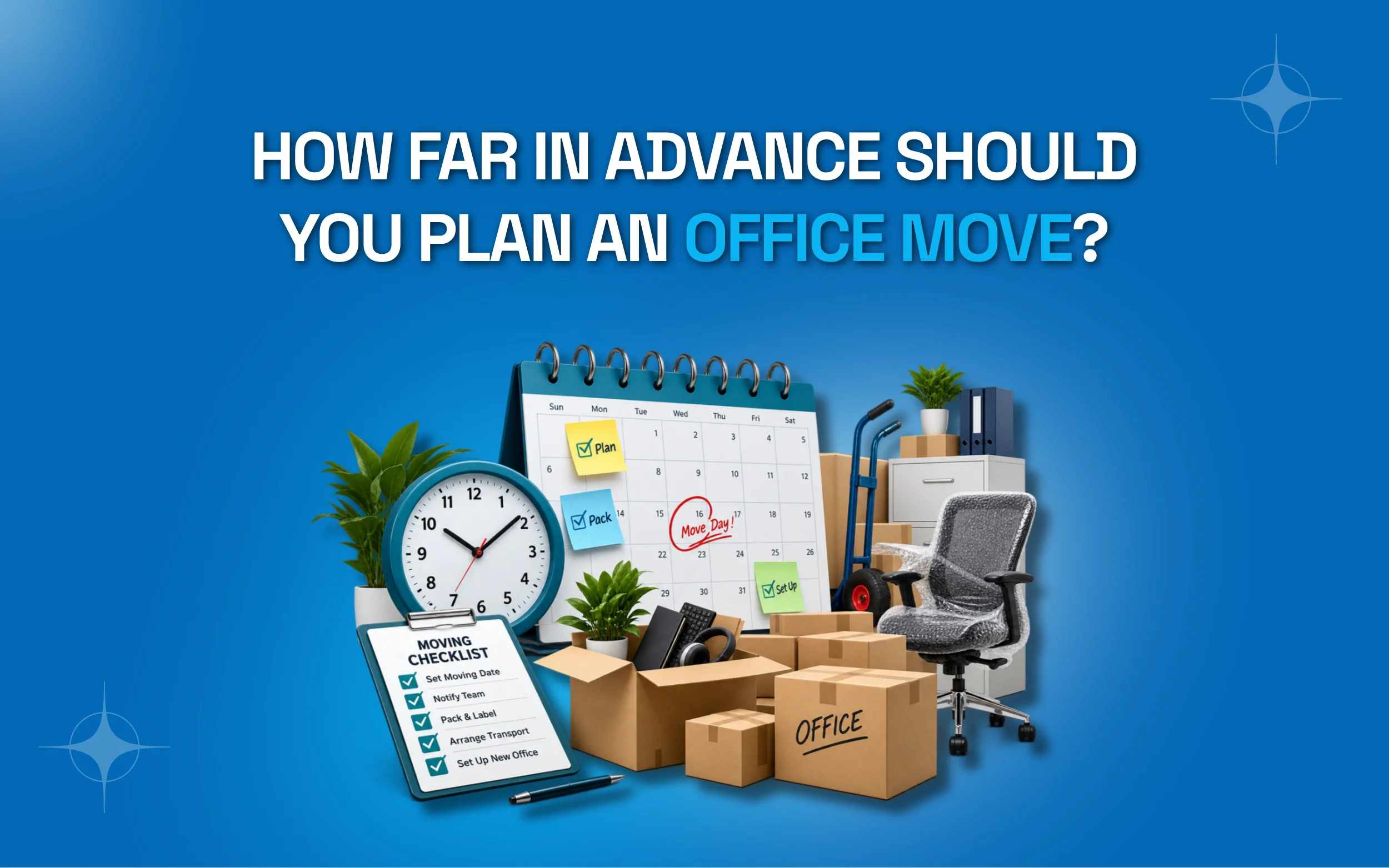
Most experts recommend starting to plan an office move at least 3 to 6 months in advance. Smaller offices with fewer than 20 employees may manage with 2 to 3 months, while larger companies with more staff, equipment, and technology often need 6 months or more. How Far in Advance Should You Plan an Office Move? It depends on your business size, relocation distance, equipment, and overall moving requirements. Starting early gives you time to organize, choose the right moving company, and prepare your team.
An office move is more complex than moving a home. You may need to relocate computers, servers, furniture, important documents, and other business equipment while keeping daily operations running. Waiting too long can lead to rushed decisions, unexpected costs, and unnecessary downtime. A clear moving timeline helps you stay organized and handle each step efficiently. In this guide, we’ll explain how far in advance you should plan an office move and what to focus on each month for a smoother transition.
Why Office Move Planning Timeline Matters
A good timeline keeps your team calm and your business running. Without one, tasks get missed, deadlines slip, and costs quietly add up. Planning early gives you room to fix problems before they turn into emergencies.
Think about everything that has to happen before moving day. You need to find a new space, sign a lease, notify vendors, update your address everywhere, and pack an entire office. Each task depends on another one. If you plan too late, tasks pile up at once and mistakes happen. That is why the question of how far in advance should you plan an office move is not just a scheduling detail. It is one of the most important decisions in the whole process.
How Far in Advance Should You Plan an Office Move?
The honest answer depends on your office size and how complex your setup is. A small team with basic furniture can move faster than a large company with a full server room and dozens of desks. Here is a simple breakdown based on company size.
Small office under 20 people: Start planning 2 to 3 months before your move date. This gives enough time to pack, notify clients, and set up the new space without rushing.
Medium office 20 to 75 people: Give yourself 4 to 5 months. You will need extra time to coordinate departments and manage IT equipment safely.
Large office over 75 people: Plan 6 months or more ahead. Bigger teams mean more furniture, more logistics, and more approvals needed from leadership.
Companies with sensitive equipment: Add extra weeks regardless of size. Servers, lab equipment, or specialized machines need careful handling and professional movers who know how to protect them.
6 Months Before the Move: Early Planning Stage
This is where the real groundwork begins. Decisions made now shape how smooth the rest of the move will feel later. At six months out, your main job is research and budgeting. Start by reviewing your current lease terms so you know your exact move-out date and any penalties involved. At the same time, begin searching for your new space with a clear list of needs like square footage, parking, and location. Set a realistic moving budget that covers rent deposits, movers, new furniture, and unexpected costs. Many companies skip this early budgeting step and regret it later when expenses pile up fast. Starting here means you avoid rushed decisions when time gets tight closer to the actual move date.
3 to 4 Months Before: Vendor and Logistics Planning
Once your new space is confirmed, this stage is about locking in the people and services that will make the move happen.
Hire a moving company: Book professional movers early since good companies get booked fast during busy seasons. Waiting too long may leave you with fewer choices and higher prices.
Notify your landlord: Send formal written notice according to your lease agreement. This protects you legally and avoids confusion about your move out date.
Plan your IT transition: Talk to your IT team or provider about disconnecting and reconnecting servers, internet, and phone lines. This step often takes longer than people expect.
Update vendor contracts: Contact suppliers, cleaning services, and delivery companies with your new address. Doing this early prevents missed deliveries after the move.
2 Months Before: Confirming Details
At this point, the big decisions are done and it is time to confirm everything in writing. This stage is about tightening loose ends before things get busy. Confirm your moving date and time with your chosen movers in writing. Order any new furniture now so it arrives before or on move day. Start informing employees about the new location and what to expect. Send updated address information to your bank, insurance provider, and any government agencies that require it. This is also a smart time to plan your new office layout, so furniture placement is decided before boxes start arriving. Waiting until the last month to confirm these details often leads to unnecessary stress and last-minute changes.
1 Month Before: Final Preparations
The final month is about execution, not decision-making. Everything should already be planned. Now it is time to pack, confirm, and prepare your team.
Start packing non-essential items: Pack items you do not use daily first, like extra supplies and decorations. This spreads out the workload instead of leaving it all for the last week.
Label everything clearly: Use a simple labeling system with room names or department names. This saves hours of confusion when unpacking at the new office.
Confirm building access: Check move in rules for your new building, including elevator bookings or loading dock access. Many office buildings require advance scheduling for large moves.
Back up all IT systems: Make sure your IT team backs up important data before disconnecting anything. This protects your business in case something goes wrong during transport.

Moving Week: Last Minute Checklist
Moving week is when all the planning pays off. Keep things simple and focused on execution rather than new decisions.
|
Task |
Who Handles It |
Timing |
|
Final walkthrough of old office |
Office manager | 1 to 2 days before |
|
Disconnect internet and phones |
IT team | Day before move |
| Pack personal desk items | Each employee |
Final day at old office |
|
Load and transport furniture |
Moving company | Move day |
| Set up internet at new office | IT team |
Move day or next morning |
| First day check in with staff | Office manager |
Day after move |
This simple checklist keeps everyone on the same page during the busiest part of the process.
Common Mistakes That Delay Office Moves
Even with good intentions, many businesses run into avoidable problems. Knowing these mistakes ahead of time helps you steer clear of them completely.
Waiting too long to book movers: Popular moving companies fill up fast, especially at the end of the month. Booking late often means paying more or settling for a less experienced team.
Underestimating IT needs: Many companies forget that servers and networks take real time to disconnect and reinstall safely. This alone can delay a business from opening on schedule.
Skipping employee communication: When staff are not informed early, confusion and frustration build up quickly. Clear updates reduce stress and keep productivity steady during the transition.
Ignoring the new office layout: Moving furniture in without a plan leads to wasted time rearranging everything later. A simple floor plan drawn out early saves hours of confusion on move day.
Benefits of Hiring Professional Commercial Movers
Trying to manage an office move without help often costs more time and money than expected. Professional movers bring experience that keeps things safe and on schedule. Hiring experts for your move means less risk to your equipment and furniture. Trained movers know how to handle heavy desks, sensitive electronics, and fragile items without damage. They also come with proper equipment like dollies, padding, and trucks built for business moves.
This means your staff can focus on their actual jobs instead of spending days lifting boxes. For companies with tight deadlines, working with reliable commercial moving services can be the difference between a smooth transition and a stressful one. A good moving partner also helps you stick to your planned timeline instead of falling behind.
How Company Size Affects Your Moving Timeline
Bigger teams need more time simply because there is more to coordinate. This table gives a quick reference for planning based on your office size.
|
Company Size |
Recommended Planning Time | Main Focus Areas |
| Under 20 employees | 2 to 3 months |
Packing, address updates, basic logistics |
|
20 to 75 employees |
4 to 5 months | Department coordination, IT transition |
| Over 75 employees | 6 months or more |
Leadership approvals, large scale logistics |
|
Special equipment offices |
Add 2 to 4 extra weeks |
Specialized handling and setup |
Use this table as a starting point, then adjust based on your specific business needs. Keep in mind that industry type also plays a role. A law firm with heavy paper files may need more packing time than a tech company that runs mostly on laptops and cloud storage.
Signs You Need to Start Planning Right Away
Some situations call for immediate action rather than waiting for a perfect timeline. If any of these apply to you, it is time to start planning now. Your lease is ending in less than four months and you have not found a new space yet. Your company is growing fast and your current office no longer fits your team. You have received notice from your landlord about upcoming changes to your building. Or your business needs specialized equipment moved safely, which always requires extra lead time. If you recognize any of these signs, do not wait for a convenient moment. Reach out to movers and start your search for space as soon as possible.
Budgeting for an Office Move
Money matters just as much as time when you plan an office move. A clear budget helps you avoid surprise costs that show up halfway through the process. Most office moving budgets should cover more than just the moving truck and labor. There are often hidden costs that catch businesses off guard if they are not planned for early. Below is a simple table showing common cost categories to help you build a realistic budget.
|
Cost Category |
What It Covers | When to Plan It |
| Moving company fees | Labor, truck rental, packing materials |
3 to 4 months before |
|
New furniture |
Desks, chairs, storage units | 2 to 3 months before |
| IT setup costs | Server transport, internet installation |
2 to 3 months before |
|
Cleaning services |
Old office cleanup, new office prep | 1 month before |
|
Signage and branding |
New building signs, updated stationery |
1 to 2 months before |
| Downtime costs | Lost productivity during the move |
Plan buffer time around move day |
Reviewing this list early helps you avoid scrambling for extra funds close to your move date.
How to Communicate the Move to Clients and Partners
Your team is not the only group that needs updates about the move. Clients, partners, and vendors also need clear communication to avoid confusion. Start by drafting a simple announcement that includes your new address, moving date, and any temporary changes to business hours. Send this update through email and update it across your website and social media pages.
If you work closely with vendors or delivery partners, give them a heads up a few weeks earlier so shipments do not go to the wrong address. Clients appreciate transparency, and a short friendly message goes a long way in maintaining trust during the transition. Waiting until the last minute to share this information can create confusion and missed deliveries right when your business needs things to run smoothly. A short heads up now saves awkward follow up calls later.
Setting Up Your New Office for Day One Success
Moving boxes into a new space is only half the job. Setting things up properly makes the first day back to work feel normal instead of chaotic.
Test all technology first: Check internet, phones, and printers before employees arrive on day one. Fixing tech issues without staff waiting around saves time and reduces frustration.
Set up common areas early: Break rooms and meeting spaces help the office feel functional right away. Employees settle in faster when shared spaces are ready to use.
Walk through safety features: Point out exits, fire extinguishers, and emergency procedures in the new building. This is especially important since many employees will be unfamiliar with the new layout.
Plan a simple welcome moment: A quick team meeting or coffee morning helps ease the transition. Small gestures like this boost morale after a stressful moving period.

How to Choose the Right Moving Company for Your Timeline
Not every moving company works the same way, and this affects how early you should book them. Some factors matter more than others when narrowing down your choice.
Experience with office moves: Ask if they specialize in commercial moves rather than only residential ones. Office moves require different equipment and planning compared to home moves.
Availability during your timeline: Confirm they can commit to your exact moving dates well in advance. Flexible companies may seem convenient but can lead to scheduling conflicts later.
Insurance and liability coverage: Make sure your equipment and furniture are protected during transport. This protects your business from unexpected costs if damage occurs.
Clear pricing structure: Ask for a detailed quote instead of a vague estimate. Understanding costs early helps you plan your budget accurately from the start.
Getting Employees Involved in the Move
A move goes much smoother when employees feel included instead of just informed after decisions are made. Their input can also reveal small details managers might miss. Ask department leads what equipment or supplies need special handling during the move. Some teams may have unique needs, like extra monitors, filing cabinets, or shared printers that require careful planning.
Giving employees a simple checklist for packing their own desks also keeps things organized and reduces confusion on move day. Consider assigning a point person in each department who can answer quick questions and pass along updates. This small step keeps communication flowing in both directions instead of relying only on emails from management. Employees who feel involved tend to adjust to the new space faster and with less stress.
Handling Sensitive Documents and Equipment
Not everything in an office can be packed the same way. Sensitive files and delicate equipment need extra care to avoid loss or damage during transport.
Secure confidential files: Use locked boxes or cabinets for sensitive paperwork like contracts or employee records. This protects private information from getting lost or misplaced during the move.
Label fragile electronics clearly: Mark monitors, servers, and other delicate items so movers know to handle them carefully. Clear labels reduce the risk of accidental damage during loading and unloading.
Back up digital files separately: Keep a backup of important digital documents in the cloud before moving physical hardware. This adds a safety net in case something happens to your equipment.
Assign a document owner: Have one person responsible for tracking sensitive files during the move. This avoids confusion about who is accountable if something goes missing.
Final Thoughts on Planning Your Office Move
If you are still asking yourself how far in advance should you plan an office move, the safest answer is always sooner rather than later. Even if your move date feels far away, small early steps save you from stress later. A well planned move protects your team, your equipment, and your business operations from unnecessary disruption. Businesses that plan early also tend to spend less overall, since rushed decisions almost always cost more money in the end.
No two office moves look the same, but the timeline principles stay consistent across every business size and industry type. Start with research, lock in your vendors, confirm the details, and finish strong with clear communication. Following this structure turns a stressful process into one your whole team can handle with confidence and less last-minute pressure.
Ready to Plan Your Office Move the Right Way?
Every successful office move starts with a clear timeline and the right team behind you. Whether your move is 6 months away or approaching faster than expected, getting expert help can save you time, money, and stress. Get in touch today for a free quote and a personalized moving plan designed around your business needs and timeline. A little planning now means a calmer, smoother move later.
Frequently Asked Questions
How far in advance should you plan an office move for a small business?
Small businesses with fewer than 20 employees should start planning about 2 to 3 months before the move date. This gives enough time to pack, notify vendors, and set up the new space calmly.
What is the best time of year to move an office?
Many businesses prefer moving during weekends or slower business periods to reduce disruption. Avoiding month-end and quarter-end dates also helps since moving companies are usually busier then.
How long does it take to pack an entire office?
Packing time depends on office size, but most businesses need 1 to 3 weeks for full packing. Starting with non-essential items early spreads out the workload and reduces last-minute pressure.
Do I need to hire professional movers for an office relocation?
While it is possible to move without help, professional movers reduce risk to equipment and save significant time. They also bring proper tools and experience for handling office furniture and electronics safely.
How much does an office move usually cost?
Costs vary widely based on office size, distance, and the amount of equipment involved. Getting quotes from a few moving companies early helps you plan your budget more accurately.
What should I tell my employees about an upcoming office move?
Share the moving date, new address, and what they need to pack personally well in advance. Clear communication reduces confusion and helps employees feel prepared instead of caught off guard.
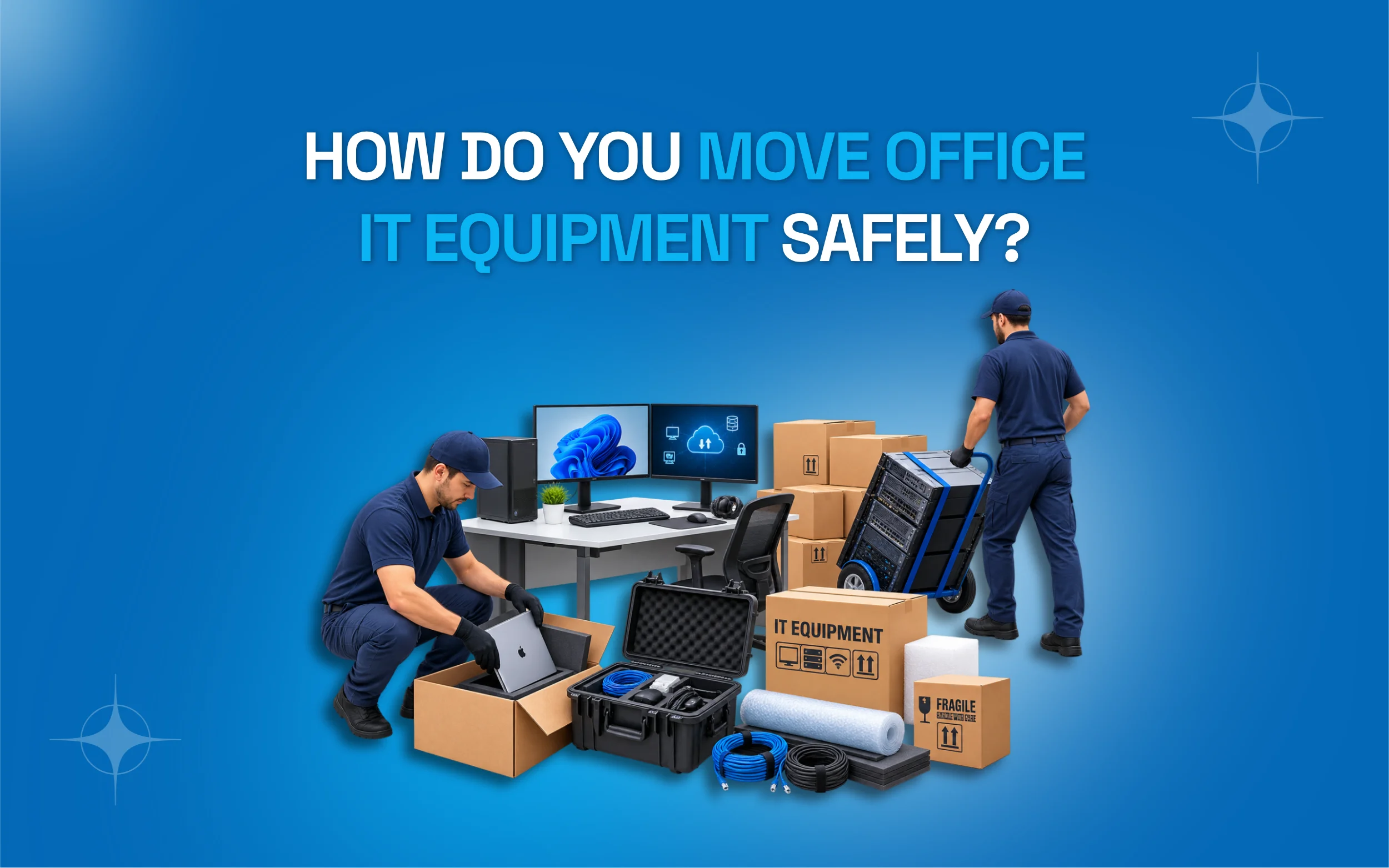
Can I move office IT equipment myself instead of hiring help?
It is possible for very small offices, but larger setups with servers benefit from professional IT support during the move. Mishandling equipment can lead to costly damage or long downtime after the move.
If you want to know: How Much Does a Commercial Move Cost? Average Expenses, Factors & Tips