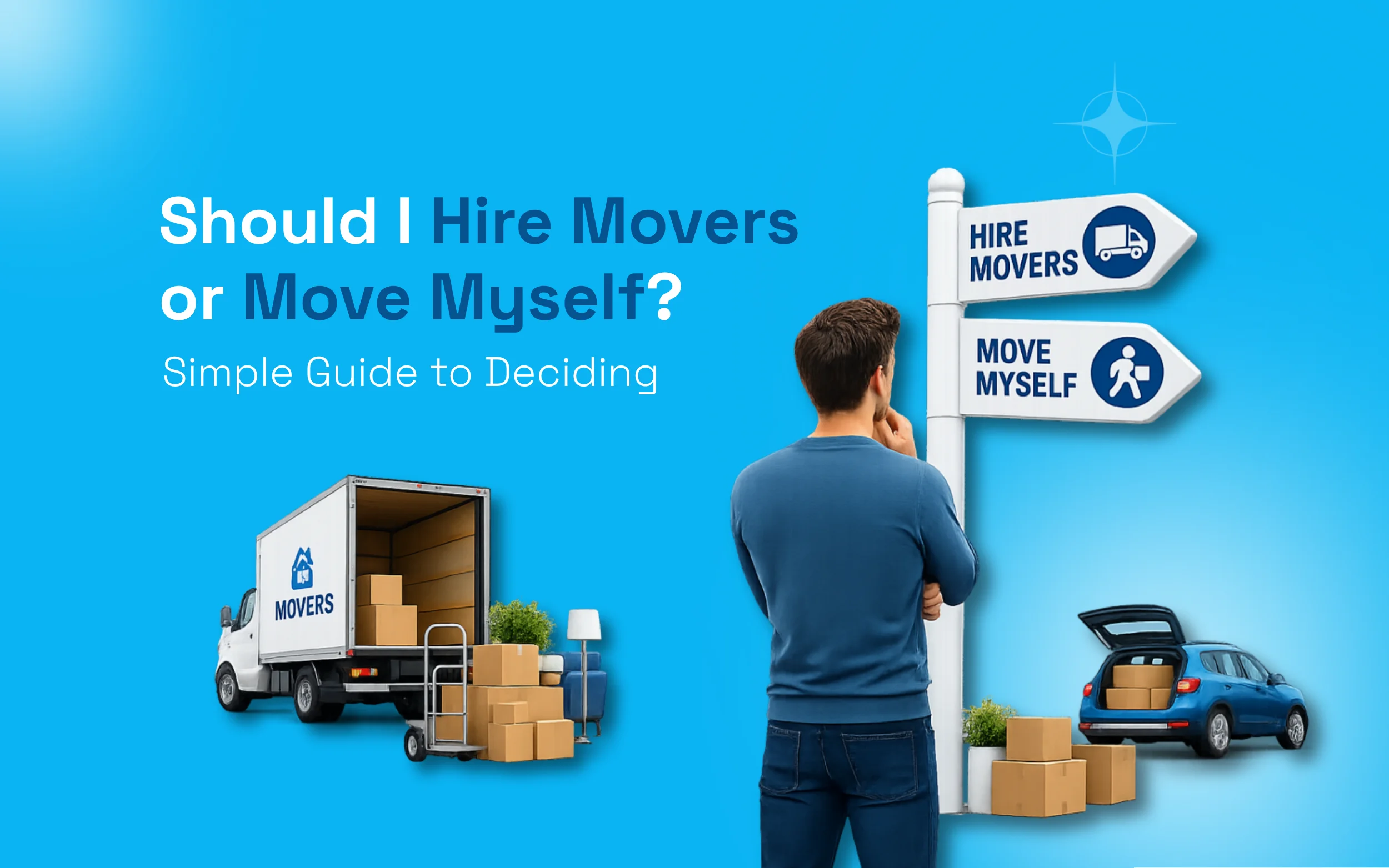
Moving day sounds simple until you actually start planning it. Suddenly, you are standing in a room full of boxes and wondering what to do next. Should you rent a truck, ask friends for help, or hire professional movers? Should I hire movers or move myself? The answer is not always as simple as choosing the cheaper option. A DIY move can save money. But it also means handling the packing, lifting, driving, and other work yourself. Hiring movers can make the process easier. But you need to decide if the extra cost is worth it.
The right choice depends on your move. How much you own, how far you are going, how much time you have, and how much work you can handle all matter. In this guide, we will simply compare both options. You will see the costs, benefits, and challenges of each choice before making your decision.
Should I Hire Movers or Move Myself? The Quick Answer
If your move is local and you own a small amount of furniture, a DIY move can save you money. If your move is long-distance or you have heavy items like a couch or a piano, hiring movers is usually the smarter and safer choice.
The real answer depends on three things.
→ Your budget: How much can you spend right now without stress?
→ Your time: How many free days or weekends you actually have.
→ Your stuff: How much you own and how heavy or delicate it is.
Once you look at these three things clearly, the answer to should I hire movers or move myself becomes much easier to see.
What a DIY Move Really Costs
A do-it-yourself move sounds cheap at first but it comes with several hidden costs that add up fast.
Truck rental: Prices jump on weekends and during summer and can double for a long distance trip since demand for trucks is highest during these times. Booking early sometimes helps but rates still climb fast the closer you get to your move date.
Gas: Moving trucks are heavy and drink fuel fast especially on long highway drives with a full load. A cross country trip in a rental truck can easily burn through hundreds of dollars in fuel alone.
Packing supplies: Boxes tape bubble wrap and furniture pads all cost money and run out faster than expected once you start packing a full home. Most people underestimate how many boxes a single room actually needs.
Extra insurance: Rental companies often push you to buy coverage that adds to the final bill and without it any damage to the truck itself becomes your responsibility. This cost is easy to miss when comparing prices online.
Lost workday: Taking time off work to pack load and drive is money too, even if it does not feel like it at first. A weekend move can quietly turn into three or four unpaid days once packing and driving time is included.
Mistakes and redo trips: A wrong-size truck or a missed exit means extra gas extra hours and sometimes a second trip back for leftover items. These small errors are common for first-time DIY movers and rarely show up in the original budget.
Food for helpers: Feeding friends who help you lift and load adds a small but real cost to the day and is easy to forget when planning. Multiply that cost by every helper, and it becomes a noticeable line item by the end.
Once you add all this up should I hire movers or move myself is not always answered by the truck rental price alone. Many DIY movers are surprised to see the real total once every hidden fee is counted.

What Hiring Movers Really Costs
Professional movers price local moves by the hour and long-distance moves by weight or cubic feet. Here is what that price actually covers.
Labor: Trained movers know how to lift, wrap, and pack safely, which lowers the risk of damage or injury during the move. This experience is built from doing hundreds of moves, and it shows in how smoothly the day goes.
Equipment: Dollies, straps, and moving blankets are included in the price at no extra cost to you. Buying or renting this same gear on your own would add several more line items to a DIY budget.
Insurance: Your items are protected so a broken item does not come out of your own pocket at the end of the day. This coverage gives real peace of mind, especially for expensive or sentimental belongings.
Speed: A trained crew loads and unloads far faster than you and your friends since they work as a coordinated team. What might take you a full day can often be done by professionals in just a few hours.
Full or partial service: You can pack everything yourself or let the crew pack for you and pay only for what you need. This flexibility helps you control the final cost while still getting expert help where it matters most.
Peace of mind: No last-minute truck breakdowns missing tape or surprise second trips to worry about on moving day. You get to focus on your new home instead of logistics.
For exact numbers by home size, check our local moving services cost guide before comparing it against your DIY budget.
Time and Energy: The Hidden Cost of Moving Yourself
This is the part people forget when they ask should I hire movers or move myself. Time is money too.
Packing a whole home takes days, not hours. Then you have to load a truck drive it safely and unload everything at the other end. If you work a full-time job, this can eat up your entire weekend or more.
Packing time: Most homes take two to four days to pack properly.
Loading time: A full apartment can take four to six hours to load.
Driving stress: Driving a large truck is tiring and sometimes scary on highways.
Recovery time: Your body needs rest after lifting heavy boxes all day.
If your schedule is already tight, hiring movers gives back your weekend and your energy.
When a DIY Move Makes Sense
A self move is not a bad choice for everyone. It works well in certain situations.
Small space: You live in a studio or one-bedroom apartment.
Short distance: You are moving across town, not across the country.
Strong support system: Friends or family can help you lift and drive.
Flexible schedule: You have several free days to spread out the work.
Tight budget: Every dollar matters and you are willing to trade time for savings.
If most of these apply to you, a DIY move can work out just fine.

When You Should Hire Movers
On the other hand, some situations almost always call for professional help.
Long-distance move: Driving a rental truck across states is risky and exhausting.
Heavy or bulky items: Pianos, gun safes, and large furniture need trained hands.
Limited time off: You cannot afford to lose several workdays.
Physical limits: Back problems or health issues make heavy lifting unsafe.
High-value belongings: Antiques, art, or fragile items need expert packing.
If any of these match your situation, the answer to should I hire movers or move myself leans strongly toward booking residential moving services instead of doing it alone.
Risk of Damage and Injury
This part gets skipped a lot, but it matters. Moving heavy furniture without training is one of the top causes of home injuries during a move.
Back strains dropped boxes and scratched floors happen more often in DIY moves. Professional movers carry insurance, so if something breaks, you are covered. With a self-move, any damage comes out of your own pocket.
Furniture damage: Couches and dressers get scratched or cracked without proper padding.
Wall and floor damage: Doorways and stairs are easy to bump during a rushed move.
Personal injury: Sprains and back injuries are common without proper lifting form.
Safety alone is a strong reason many people choose to hire help instead of doing it all themselves.
Distance Matters: Local Move vs Long Distance Move
The distance of your move changes the whole equation. A move across town is very different from a move across the country.
Short local move: Often manageable in a single day. Follow our local moving checklist if you plan to handle it yourself so nothing important gets missed.
Long-distance move: Renting a truck for multiple days plus fuel and overnight stays adds up fast. This is usually where booking local movers for your upcoming move makes more financial sense than doing it alone.
Move timing: Your date affects your final price either way. See best time to move to learn how the right date can lower your cost.
Home size and route: A studio moving locally and a full house moving across states need very different plans, so match your approach to your actual situation.
Packing Tips if You Decide to Move Yourself
If you decide to move yourself after weighing should I hire movers or move myself then a few simple packing habits can make moving day much easier. Start packing at least two weeks early and begin with rooms or items you do not use often. Label every box with the room name and a short list of what is inside so you can find things quickly later. Use small boxes for heavy items like books and larger boxes for lighter things. Wrap glass dishes and other fragile items with paper or towels to keep them safe. Also keep your essentials separate with chargers snacks and toiletries for your first night.
Questions to Ask a Moving Company Before You Hire Them
If you decide hiring movers is the safer path, do not just book the first company you find. A few quick questions can save you from a bad experience later.
Are you licensed and insured? A real mover should have a USDOT number for interstate moves.
How is pricing calculated? Ask if it is hourly, weight-based, or cubic-foot-based.
What is not covered by insurance? Some items like cash or jewelry may need separate coverage.
What happens if my move date changes? Ask about rescheduling fees ahead of time.
Do you have recent reviews? Real customer reviews tell you more than a sales pitch ever will.
Getting clear answers before you sign anything protects you from surprise fees and gives you confidence in your choice.

How to Decide: A Simple Checklist
Still stuck on should I hire movers or move myself? Run through this quick checklist.
Count your boxes: If you have fewer than 30 boxes, then a DIY move may be manageable. If you have more than 30 boxes, then hiring movers may save you time and effort.
Measure the distance: A move under 50 miles can be easier to handle yourself, while longer moves may be less stressful with professional movers.
Check your calendar: If you have less than two free days to pack and move everything, then professional help can make the process much faster.
Think about your body: If lifting heavy boxes or furniture could be difficult or uncomfortable, then choosing movers may be the safer option.
Add up the real costs: Before deciding compare the cost of a DIY move, including the truck, fuel, supplies, and other expenses, with a moving quote.
Answering these five questions honestly will point you toward the right choice for your specific move.
Conclusion
At the end of the day, the choice between hiring movers or moving yourself comes down to your budget, your time, and how much you own. There is no single right answer for everyone. What matters most is being honest about what you can realistically handle without burning out.
If you still feel unsure, think about your schedule, your stuff, and your stress levels this week. That combination usually points you in the right direction faster than any guide can. Whatever you choose, plan early, pack smart, and give yourself extra time on moving day. If you want helpful moving tips, cost guides, packing advice, and more, visit here to explore more.
Ready to Make Your Move Easier?
If you are starting to feel that hiring movers may be the better choice, you do not have to handle everything on your own. If you think hiring movers is the better choice, get a free moving quote today and make your move easier.
Frequently Asked Questions
Is it cheaper to hire movers or move myself?
For small local moves, a DIY move is often cheaper. For long-distance or large moves, hiring movers can actually save money once hidden truck costs are added up.
How much do professional movers usually cost?
Local moves are often priced by the hour, while long-distance moves are priced by weight or cubic feet. Costs vary based on your home size and distance.
Can one person move a whole apartment alone?
It is possible for a small studio, but it is slow and tiring. Most people need at least one extra set of hands for a smoother move.
What items should never be moved without help?
Pianos, safes, large appliances, and glass furniture should always be handled by trained movers to avoid injury or damage.
Is a DIY move safe for a long-distance trip?
It can be risky due to driver fatigue, unfamiliar roads, and truck handling. Long-distance moves are usually safer and easier with professional movers.
Do movers pack boxes or do I need to pack myself first?
Most companies offer both options. You can choose full-service packing or pack your own boxes and let movers handle only the loading and driving.
How far in advance should I book movers?
Booking three to four weeks ahead is a good rule for local moves and even earlier for long-distance moves during busy seasons like summer.
If you want to know Hidden Moving Costs: What You Should Know Before You Book please click here.