Ever opened a moving quote and felt totally lost? You are not alone. Most people have no idea why one mover charges $800 and another charges $2,500 for the exact same job. The truth is simple once you know it.
So, how are moving costs calculated? Movers usually price your move based on either the weight of your items or the cubic feet they take up in the truck, plus distance, labor, and any extra services you need. That is the short answer. But there is a lot more to it, and knowing the details can help you save real money. In this guide, we will break down cubic feet vs weight moving, explain what a moving quote actually includes, and show you the difference between a binding and non-binding estimate. By the end, you will be able to read any moving quote like a pro.
How Are Moving Costs Calculated?
Moving companies do not just guess a price. They use a formula based on a few key things. These usually include how much stuff you have, how far it is going, how many movers and hours it takes, and any special services like packing or furniture disassembly.
For a local move, most companies charge by the hour. You pay for the truck, the movers, and the time it takes to load, drive, and unload. For a long distance move, pricing usually switches to either weight or cubic feet. This is where things get interesting, and where a lot of people get confused.
Let us say you are moving a two-bedroom apartment. A local move might cost you around $500 to $800 for four hours of work with two movers. But if that same apartment is moving across the country, the mover will look at the total weight of your boxes and furniture, then multiply that by a rate per pound. This is why the same amount of stuff can cost very different amounts depending on the distance.
If you want to understand the full pricing structure movers use, our How Pricing Works page breaks it down in even more detail.
Cubic Feet vs Weight Moving: What Is the Difference?
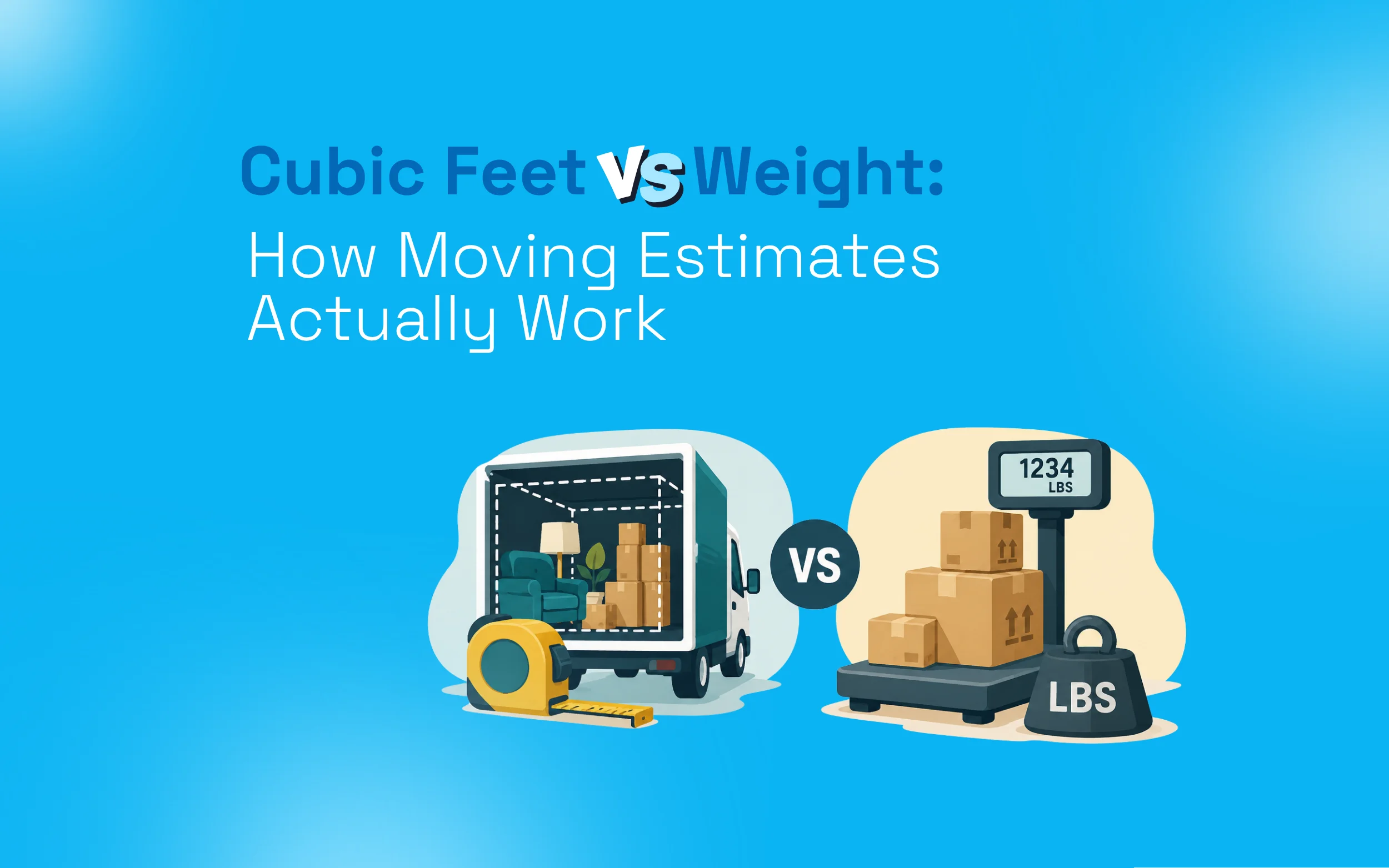
This is one of the biggest points of confusion in the moving industry. Some companies charge by weight. Others charge by cubic feet. Knowing the difference matters a lot for your wallet.
Weight based pricing means the moving company weighs the truck before and after loading your items. The difference is your total weight. You then pay a rate per pound, often between 50 cents and $1.50 depending on the distance. Heavy items like bookshelves, dressers, and exercise equipment can quickly add up the cost here.
Cubic feet pricing means the mover measures how much space your items take up in the truck, not how heavy they are. This method often works better for people with lots of bulky but lightweight items, like a couch, a mattress, or plastic storage bins. If your home is full of light but large furniture, cubic feet moving could actually save you money compared to weight based pricing.
Before you book anything, ask the moving company directly which method they use. This single question can save you hundreds of dollars.
What Is Included in a Moving Quote?
Understanding a moving quote explained in plain language can save you from surprise fees on moving day. A typical quote should include the following.
- Base transportation cost (based on weight or cubic feet)
- Labor charges for loading and unloading
- Fuel surcharge
- Packing materials, if you request them
- Insurance or valuation coverage
- Extra fees for stairs, elevators, or long carry distances
- Storage fees, if needed
A good moving company will walk you through each of these line by line. If a company gives you a quote with no breakdown, that is a red flag. Always ask for an itemized moving quote so you know exactly what you are paying for. Think of this section as your moving quote explained in plain terms, so nothing on your bill feels like a surprise.
Many people skip this step and regret it later. A missing detail like an elevator fee or a long carry charge can turn a $900 move into a $1,400 move overnight. Reading the fine print really does matter here.
Binding vs Non-Binding Estimate: Which One Should You Choose?
This is one of the most important things to understand before you sign anything. The difference between a binding vs non-binding estimate can make or break your moving budget.
A binding estimate means the price is locked in. What you are quoted is what you pay, no matter how the actual weight or cubic feet turn out on moving day. This gives you peace of mind and no surprises.
A non-binding estimate means the final price can change based on the actual weight or space your items take up. If your stuff weighs more than estimated, you pay more. If it weighs less, you might pay less too. This option carries more risk, but it can also work in your favor if you end up with less stuff than expected.
Think of it like ordering food at a restaurant. A binding estimate is like ordering a fixed price meal. You know exactly what you will pay before you eat. A non-binding estimate is more like paying by weight at a buffet. You might grab less than you think, or you might grab more than planned, and the final bill changes either way.
For most people, a binding estimate is the safer choice, especially for a first time move or a long distance move. It removes the stress of wondering what your final bill will look like.

Other Factors That Affect Your Moving Cost
Weight and cubic feet are big factors, but they are not the only ones. Here are a few other things that can change your final price.
Distance: The farther you move, the more you pay in fuel, labor hours, and mileage.
Time of year: Summer months and weekends are the busiest moving times. Prices tend to be higher during these peak seasons. Moving in the middle of the month or during winter can often save you money.
Access difficulty: Narrow staircases, no elevator, or a long walk from the truck to your front door can add extra labor charges.
Special items: Pianos, safes, pool tables, and fragile artwork often need special equipment and extra care, which adds to the cost.
Packing services: If you want the movers to pack everything for you, this adds both material costs and labor hours.
Average Moving Costs by Home Size
Numbers help a lot when you are trying to plan a budget. While every move is different, here is a general idea of what you might expect for a long distance move based on home size. Keep in mind these are rough averages, and your actual moving quote may look different based on distance and extra services.
Studio or one bedroom apartment: Around 2,000 to 3,000 pounds of items. Expect a moving cost between $1,200 and $2,500 for a cross country move.
Two bedroom home: Around 5,000 to 6,000 pounds. Expect a moving cost between $2,500 and $4,500.
Three bedroom home: Around 8,000 to 10,000 pounds. Expect a moving cost between $4,000 and $7,500.
Four bedroom home or larger: Over 12,000 pounds. Expect a moving cost of $7,000 or more depending on distance.
These numbers shift a lot depending on cubic feet vs weight moving methods, how far you are going, and the season. A three bedroom home moving 200 miles will cost far less than the same home moving 2,000 miles. This is why getting a real quote based on your actual items always beats guessing from a chart.
How Movers Actually Measure Your Items
Have you ever wondered how moving companies calculate your shipment’s weight or cubic feet? Most use either an in-home survey or a virtual survey. During an in-home visit, they inspect your furniture and belongings in person, while a virtual survey lets you show everything through a video call. Both methods provide a much more accurate estimate.
Phone estimates are usually the least accurate because the mover relies only on your description. This can lead to a lower quote that increases on moving day, especially with a non-binding estimate. Whenever possible, choose a video or in-home survey to get a more accurate and reliable moving estimate.
Questions to Ask Before You Sign a Moving Contract
A few smart questions upfront can protect you from a messy moving day. Ask these before you put your name on anything.
- Do you charge by weight or cubic feet?
- Is this a binding or non-binding estimate?
- What is not included in this price?
- Do you charge extra for stairs or long carries?
- What happens if my move takes longer than planned?
- Is there a cancellation fee?
A trustworthy company will answer all of these clearly and without hesitation. If a mover dodges your questions or rushes you to sign, treat that as a warning sign.

Red Flags That Signal a Moving Scam
Moving scams are more common than people think, so it helps to know the warning signs. Watch out for these red flags.
- The company asks for a large deposit before the move
- They give you a quote over the phone with no home or video survey
- The business name changes on paperwork compared to their ads
- They have no physical address or licensing information
- Reviews mention items held hostage until extra cash is paid
If you notice even one of these signs, it is worth getting a second opinion from another company before booking.
Tips to Lower Your Moving Costs
Now that you understand how moving costs work, here are some simple ways to actually save money.
Declutter before you move: Fewer items mean less weight and less cubic feet, which directly lowers your bill.
Compare at least three quotes: Prices can vary a lot between companies for the exact same job.
Ask about binding estimates: Locking in your price avoids surprise charges later.
Move during off peak times: Midweek and midmonth moves are usually cheaper.
Pack your own boxes: Skipping the packing service can save you a good amount of money.
Ask about hidden fees upfront: Stairs, long carries, and storage can all add extra costs if you do not ask early.
Small changes like these can add up to real savings, sometimes hundreds of dollars off your final bill.
Final Thoughts
Understanding how moving costs are calculated does not have to feel confusing. Once you know the difference between cubic feet vs weight moving, and understand binding vs non-binding estimate options, you can read any moving quote with confidence. The key is asking the right questions before you sign anything, and comparing more than one company.
Every move is different, and every company prices things a little differently too. Take your time comparing quotes, ask for a full breakdown of charges, and choose the pricing method that fits your situation best. If you remember one thing, it is this: space, weight, distance, and service decide your final bill. A little research now can save you real stress and real money later.
Ready to see exactly what your move will cost? Get a Quote today and get a clear, honest breakdown with no hidden surprises.
Frequently Asked Questions
How are moving costs calculated for long distance moves?
Long distance moves are usually priced based on either the weight of your items or the cubic feet they take up, combined with the distance traveled. Extra services like packing or storage add to the total.
Is cubic feet or weight cheaper for moving?
It depends on your items. Heavy but small items usually cost less under cubic feet pricing. Light but bulky items often cost less under weight based pricing. Ask your mover to calculate both if you are unsure.
What is the difference between a binding and non-binding estimate?
A binding estimate locks in your final price no matter what. A non-binding estimate can change based on the actual weight or space your belongings take up on moving day.
Can a moving quote change after I book?
With a binding estimate, no. With a non-binding estimate, yes, the price can go up or down depending on your final shipment size.
How can I get the most accurate moving quote?
The best way is to have an in home or video survey done by the moving company. This gives them a real look at your items instead of guessing over the phone.
If you want to know Moving Broker vs Carrier: What’s the Difference please visit.